What Is Modern Art?
Make room for creative expression.
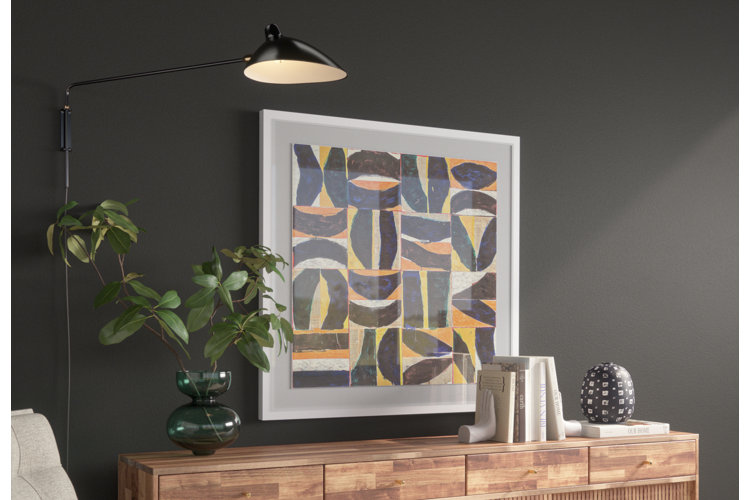
Fill your home with meaningful decor that captivates your energy and complements your contemporary interior by hanging modern art. Knowing a bit of its background can help you figure out which of the many modern art styles will best suit your home and inspire your daily routines. Read below to learn more about what modern art is or skip ahead to check out a few of our favorite examples for inspiration.
History of Modern Art
Types of Modern Art
Examples of Modern Art
What Is Modern Art?
Modern art revolves around the idea of individual expression. One's thoughts, feelings, dreams, and emotions come together in a bold fusion of colors, shapes, and textures for an alternate take on reality. The modern art movement reigned supreme from the mid-1800s to the 1960s and included a variety of art forms, such as painting, sculpture, photography, literature, and architectural design.
History of Modern Art
The history of modern art starts with the industrial revolution, which brought new ideas about life, social class, and technological innovation to the western world. This influx of new ideas inspired changes in traditional ways of thinking about all aspects of society, including the arts. Artistic movements such as Romanticism, Impressionism, and Post-Impressionism encouraged artists to think outside of the norm to break away from classical art styles.
This was especially true for Paul Cézanne, a French artist with an unconventional style. In 1861, the School of Fine Arts denied him admission due to his break from the classic art styles of the times. His Post-Impressionist artwork earned him the title of the "Father of Modern Art”, and his work would go on to inspire modern art movements like Cubism and Fauvism.
Types of Modern Art
Modern art styles span a variety of individual movements. Here are some key styles within modern art and their artists:
Impressionism (1860s-1880s)
(Think: Claude Monet, Edgar Degas, and post-impressionist Vincent van Gogh)
Impressionist art seeks to capture movement through small, intentional brush strokes and the right colors to depict natural light at an exact moment. It took off in 1860s France when Claude Monet introduced the idea of painting outdoors in an attempt to capture the energy of the world around him. Impressionism is a cornerstone in the history of modern art as it inspired later movements like Post-Impressionism, Neo-Impressionism, Fauvism, and Cubism.
Abstractionism (Late 1800s-present)
(Think: Piet Mondrain, Wassily Kandinsky, and Sonia Delaunay)
Abstract artwork stems from the concept of abstractionism (the degree to which something accurately depicts reality) and seeks to reduce reality to its most basic form by using a variety of colors, shapes, lines, and textures. Abstract art grew in popularity after the realism movement, which focused heavily on depicting scenes with the utmost accuracy. In contrast, abstract art styles sought to evoke emotion and encourage creative expression. Wassily Kandinsky is one of the modern artists who helped shape abstract art into a captivating movement that's still popular today.
Cubism (1907-1914)
(Think: Pablo Picasso, Juan Gris, and Georges Braque)
Cubism brings an abstract approach to portraits or landscapes through the use of geometric shapes, unlikely color combinations, and fragmented outlines for a form of abstract expression that captivates anyone who views it. Pablo Picasso first introduced this idea in 1907 with his painting, Les Demoiselles d'Avignon. It used striking triangular shapes and colors to create the outlines of human silhouettes. This avant-garde (experimental or unusual) art movement inspired other types of modern art including expressionism and constructionism.
Dadaism (1916-1924)
(Think: Marcel Duchamp, Hugo Ball, and Max Ernst)
Dadaism or Dada is another avant-garde art movement that developed as a response to WWI, societal norms, and traditional ways of life. Dadaism rejects all normalcy and instead focuses on conveying irrationality through expressive artwork and nonsensical images. Dadaism faded into another modern art movement; Surrealism, which took the unconventional ideas of Dadaism to another level. Salvador Dalí's Persistence of Memory and Joan Miró’s The Farm are good examples of surrealist painting.
Bauhaus (1919-1933)
(Think: Wassily Kandinsky, Walter Gropius, and Marcel Breuer)
Bauhaus art came about as a result of the Bauhaus school, created by German architect Walter Gropius in 1919. Artwork created during this period focused on geometric shapes, industrial-like designs, and the use of primary colors (red, yellow, and blue). Wassily Kandinsky adapted his work to a Bauhaus approach in Yellow-Red-Blue or Composition 8. Another well-known example of Bauhaus artwork is Piet Mondrain's Tableau 2, which featured blocks of primary colors connected with black outlines.
Learn more about this modern art style and how to achieve the look with our guide to Bauhaus Design.
Pop Art (1950-1970)
(Think: Andy Warhol, Jasper Jones, and Roy Lichtenstein)
Pop art gained popularity in the 1950s as a response to different forms of media at the time. This form of modern artwork typically includes bold fusions of color, collages using newspaper clippings or photographs, and cartoon-like scenes. Andy Warhol's Marilyn Monroe portraits are a great example of this iconic look.
Examples of Modern Art
Get inspired with a few top examples of works by modern artists that showcase the wide range of styles you can choose from to decorate your space.
1. The Dream by Pablo Picasso (1932)
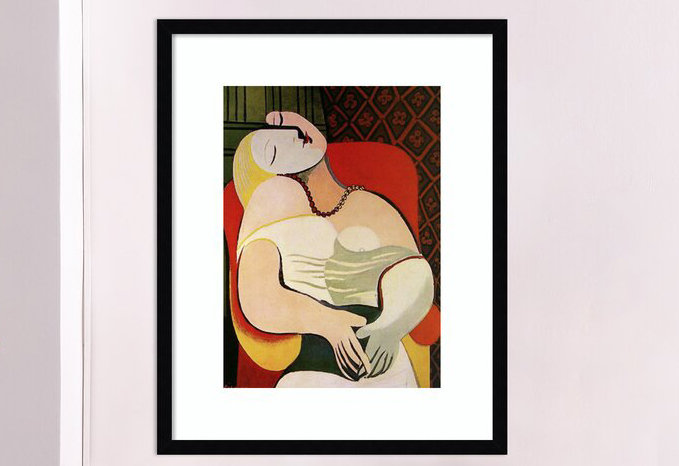
The Dream by Pablo Picasso blends the foreground and background with a creative fusion of colors and patterns for an abstract take on a portrait. Although considered a cubist work of art, The Dream echoes elements of fauvist paintings through its unnatural use of color to depict everyday life. Hang The Dream in rooms with neutral color schemes to allow it to really stand out.
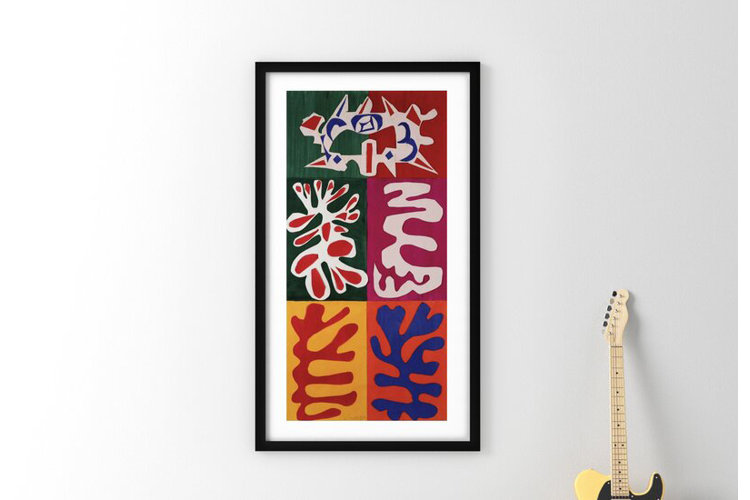
Created in 1947, this modern piece by Henri Matisse evokes the Pop Art movement of the 1950s. Using abstract shapes, striking color combinations, and a fun, collage-like template, this piece of art showcases an abstract expressionist approach. Place this fun work of art in your entryway, home office space, or dining room for a conversation starter at dinner parties.
Joan Miró's Bleu II displays rich blue hues, bold red, and abstract black shapes. This painting lends itself to the surrealist era of modern artwork, where artists intentionally promoted irrational scenes and unlikely pairings as a form of individual expression. Bleu II seeks to highlight empty space by juxtaposing it with simplistic lines and shapes to create a relaxed but intriguing display. Complement a minimalist interior with Bleu II for a bold yet simplistic vibe.
Ready to browse?
