Bauhaus Design
Function first, form second.
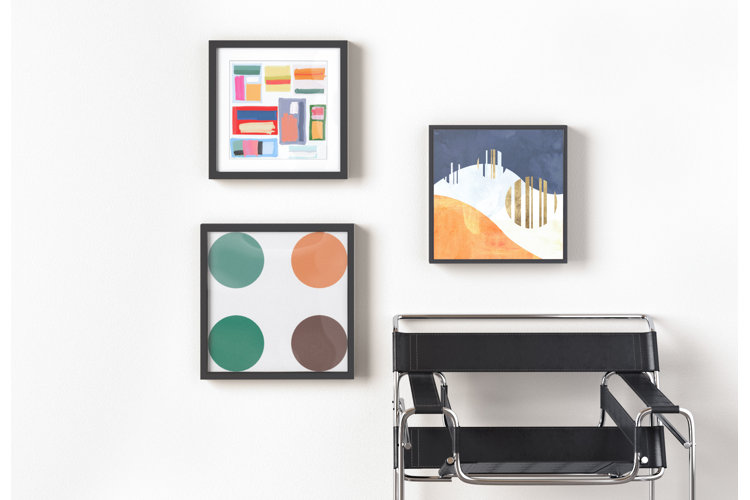
Modernism includes a variety of smaller movements that helped shape design styles, like minimalism and modern industrial design. In this guide we'll be discussing the Bauhaus design movement and simple ways you can achieve the Bauhaus design aesthetic in your home.
What is Bauhaus?
Bauhaus is a design style that merges architecture, graphic design, fine arts, and interior design to create a cohesion between arts and craft. Read below to discover its origins and how to identify it.
History
The Bauhaus movement came to be in 1919, when the German architect, Walter Gropius decided to open up an art school for painters, metalworkers, and other artists. It was called the "Staatliches Bauhaus" or "The Bauhaus" which is German for construction house. Although closed in 1933, the Bauhaus school and its teachings formed the foundations of what would become the Bauhaus design movement and influenced a range of modern styles; specifically minimalism and modern industrial design.
Bauhaus Characteristics + Principles
Keep reading below for a few of the key characteristics and principles found across Bauhaus design.
1. Maintain Simplistic, Linear Profiles
As another nod to minimalism, Bauhaus art, architecture, textiles, and furniture designs aim to maintain simple and efficient forms (think: geometric, linear profiles). This can be seen in the streamlined design of a nesting table or three-leg chair. Bauhaus design helped popularize mass produced pieces while limiting ornate details and letting the function of the furniture speak for itself.
2. Use Natural Materials
Exposed building materials and industrial forms are popular elements of Bauhaus architecture. Think modern industrialism with exposed concrete walls, steel overhangs, and wood beams. In particular, go-to Bauhaus materials include tubular steel (cost-friendly and lightweight), glass, concrete, stone or clay, metal, and natural grain wood.
3. Keep Colors Neutral + Basic
Bauhaus design prioritizes neutral shades like white, cream, beige, gray, brown, and black. However, bold primary colors are often seen in Bauhaus artwork.
Bauhaus Design Ideas
Incorporating Bauhaus design principles into your home is easier than you think. Get started with pared-back interiors, exposed natural elements, and streamlined shapes.
1. Embrace Geometric Forms
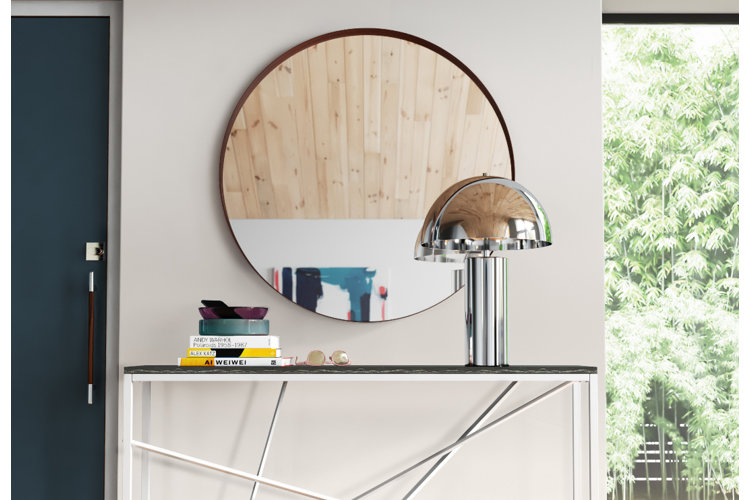
Echo Bauhaus design by bringing in furnishings and accents with bold geometric shapes and linear profiles. Opt for an entryway table with slim legs and a clean, linear frame. Complete the look with a table lamp in a cool silver finish and a dome-style top paired with a cylindrical base.
Curate your own Bauhaus interiors with a few aesthetic upgrades. Pull metal-framed chairs up to a simple concrete dining table. Pay tribute to Bauhaus design with glass pieces like a vase with a rippled silhouette. Pour evening tea out of a tea kettle with a silver finish to hint to the Bauhaus design movement’s use of cool, tubular steel.
The great thing about this idea? You can start as simple as you want, with small decor and accents made from natural materials. Then you can work your way up to staple furniture pieces with exposed frames or raw details.
Reimagine your modern home aesthetic with furniture pieces that mirror Bauhaus design. Complement your living space with an accent chair resembling the MR lounge chair by Ludwig Mies Van der Rohe. It features ribbed leather upholstery and a unique C-shaped, metallic frame, but there are other variations like the one pictured above, so you can choose one that fits with your aesthetic.
Make the transition to Bauhaus interiors simple by starting with wall art. Embrace the style’s use of primary colors and abstract linear shapes with a print resembling Piet Mondrian’s Tableau 2. Or cater to your aesthetic preferences with wall art that aligns with your color scheme but still features abstract, geometric forms. Hang Bauhaus style art to make a statement in your entryway or above your mantle, or go all out with a Bauhaus-inspired art gallery in a bare hallway.
Simplify your home aesthetic by taking after the minimalist principles of Bauhaus design. Reduce clutter with clean-lined furnishings and open silhouettes to create a refreshing space to go through your daily routine. Being minimalist with your home design also allows you to showcase unique industrial features like exposed brick, cement floors, wooden beams, or ceiling pipes.
Capture the essence of the Bauhaus movement by introducing pieces that put function before form in order to determine necessary design components for a piece. Look for pieces stripped down to their bare components like the Wassily chair by Marcel Breuer. Made with tubular steel and leather, the Wassily chair represents a club-style chair in its most basic form which allows the function of "sitting" to become the primary focus.
Ready to browse?
