The Design
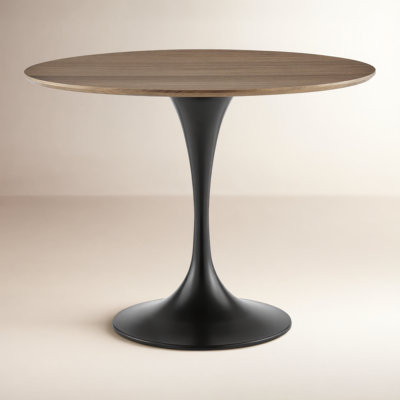
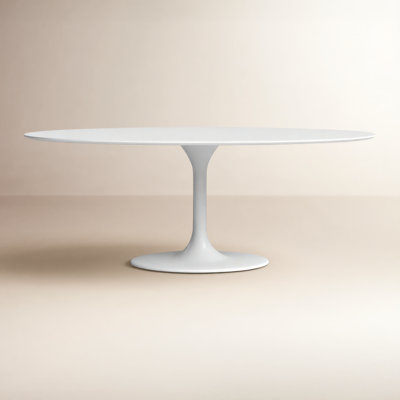
Conceived in 1953 as a rocking stool made of metal wire and wood, Noguchi's playful object was manufactured the following year in varying sizes, and later evolved into a table that became a companion piece to the Bertoia wire children's chair. At the suggestion of Hans Knoll, Noguchi's small table was enlarged to full size in 1957. Reintroduced by Knoll in collaboration with the Noguchi Foundation, the design is now meticulously produced from Noguchi's original drawings. The sculptural base consists of a column of chrome-plated steel wires set into a cast-iron, black textured powder coat base. The top is available in black or white laminate.
Features at a Glance:
Design Year: 1955
Back to Top
Dimensions:
Order with Confidence:
Back to Top
Care & Maintenance: Please view the Knoll Care & Maintenance Guide to learn more about caring for your Knoll furniture.
Back to Top
Item: |
Dimensions: |
Weight: |
|---|---|---|
| Noguchi Cyclone™ Dining Table | 28" H x 36-42" W | 83 lbs |
With a long history of design innovation for the home, workplace, and in textiles, Knoll continues to play a large part in the foundations of Modern Design. Founded in 1938 by Hans Knoll and continued after his death by his wife Florence Knoll, the company has produced a long line of award-winning and museum worthy designs from virtually every top designer in modern design.
Knoll believes good design is good business. Since its founding, Knoll has been recognized as a design leader worldwide, with products exhibited in major art museums spanning the globe, and more than 40 pieces in the permanent Design Collection of The Museum of Modern Art in New York. Legendary designs such as the Womb Chair, the Tulip Chair, and the Barcelona Lounge Chair and Ottoman are instantly recognizable icons of the company.
In addition to Knoll’s commitment to design, Knoll is an industry leader in environmentally responsible practices. All manufacturing facilities in North America are ISO 14001-certified, and all Knoll architecture and design managers are required to attain LEED® Professional Accreditation, a rating system of the US Green Building council that is a voluntary, consensus-based national standard for developing high-performance sustainable buildings.
“Create form out of the nature of our tasks with the methods of our time.” – Ludwig Mies van der Rohe
Phone orders please mention: