Find Your Perfect Area Rug
Learn which size, weave, and style is right for your space with our ultimate guide.
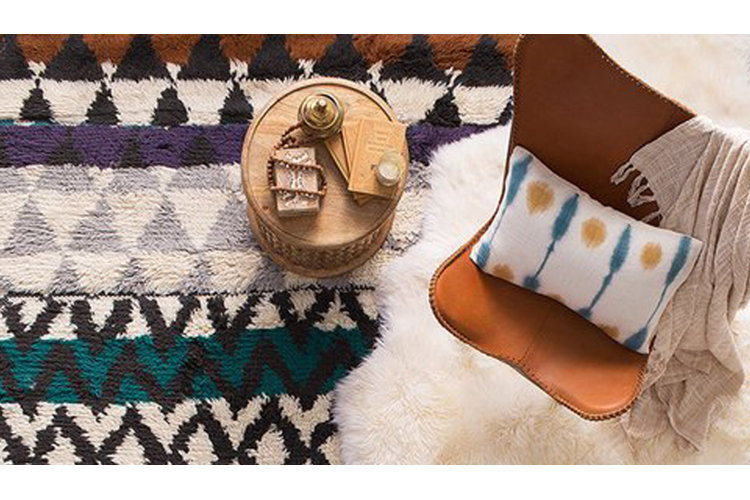
Want to get the most from your rug purchase? Consider the size, style, and purpose of your space, and let this area rug buying guide serve as your starting point.
Choose the Right Size
The size rug you need is determined by a few key factors: the overall dimensions of the room, the furniture you own, and most importantly, the function of the space. Typically area rugs are 5x8, 8x10, or 9x12 feet. If you're in between sizes, we recommend erring on the larger side.
Living Area: Seating for this room can be positioned in a number of ways around an area rug: with all furniture legs on, all legs off, or with only the front two legs resting on the rug's surface. Whichever you choose it’s important to have the rug centered around the coffee table, which is most likely the midpoint of your living space.
Dining Room: First things first, always choose a rug that’s larger than the size of your table. To prevent chairs from teetering on an uneven surface, the rug should be big enough for guests to pull their chairs out without scratching the floor underneath. To find the right size, add 36 inches to both the length and width of your table (or 36 inches to the diameter, if it’s round).
Bedroom: Make sure you have a soft surface to step on every morning by choosing a rug that extends 18-24 inches beyond each side of your bed. When determining the length of the rug, account for any furniture at the foot of the bed—the piece should either fit entirely on or off the rug.
Know Your Weaves
How a rug wears over time and how it feels below your feet is determined by its weave. Learn which one is right for your space.
Hand-knotted: These rugs are made with a time-intensive manufacturing technique in which fibers are tied by hand on a loom. While they can be higher in price, hand-knotted rugs are built to last and have an heirloom-like quality.
Tufted: This weave is made when looped yarn is cut off at the top to create a flat, plush surface, and later attached to a synthetic backing. Tufted rugs are a budget-friendly alternative, but they're prone to shedding and may require regular vacuuming.
Hooked: A hooked rug is made with the same technique that's used for tufted rugs, but the yarn loops are left intact instead of being cut off. This creates a textured quality, which is less prone to shedding.
Flatwoven, (also called dhurrie): Both terms refer to a style of mat-like rugs. Flatweaves are very durable, budget-friendly and they're also reversible, but they aren’t designed with any sort of backing, so a rug pad is highly recommended.
Learn the Materials
A rug’s softness, stain resistance, durability, and price depends greatly on its material. Consider these tips when making a purchase.
Wool: As the most common fiber used for weaving rugs, wool is affordable, soft, warm, and naturally stain resistant. While this material is sometimes prone to shedding and may require regular vacuuming, wool rugs will stand the test of time and prove to be a worthy investment.
Cotton: Versatile, low-maintenance, and easy to clean, cotton rugs are far less likely to shed, but tend to be less durable. Since most are machine-washable, cotton rugs make a great choice for the kitchen, bathroom, or space for kids.
Silk: Since they're luxurious and ultra-smooth, silk rugs have a natural sheen and softness that makes them a relaxing addition to a bedroom. Although beautiful, they're more delicate than wool and cotton versions, sensitive to moisture, and generally more expensive. Affordable alternatives to genuine silk include bamboo, banana silk and viscose.
Natural Fibers: Natural fiber rugs are created from organic materials, like jute, sisal, and sea grass, and are most often used in flatweaves. These materials are eco-friendly and among the most affordable for rug construction. Natural fiber rugs work best in rooms where there is low possibility that they'll stain, as they can be difficult to clean.
Synthetics: Polypropylene, polyester, and other synthetic fibers are often used to make indoor/outdoor rugs. Their benefits include superior stain blocking, easy care, and resistance to fading, making them an ideal choice for high-traffic areas, like entryways and patios.
Take Care
No matter the weave or material, following a few important care guidelines will ensure that your rug lives a long life.
Rotate it. Turn your rug 180 degrees once a year to prevent fading and help it age evenly.
Vacuum with care. To preserve your rug, use vacuum attachments (or a carpet sweeper), which are gentler than a standard vacuum and won’t pull up the binding at the rug's outer edges. Keep in mind that some shedding is normal for the first few months, and is not a cause for concern.
Read the label. Some rugs are machine-washable, but many are not. Before tossing your rug in the laundry or bringing it to a dry cleaner, refer to the care instructions on the label.
Spot clean the right way. A rug should get a professional cleaning every 1-2 years. In the meantime, spot cleaning is the best way to minimize stains. While the process will vary depending on the material and source of the stain, this method is safe and effective for most rugs: blot the stain (never rub it!) with a dry cloth, spray or dab it with water, and repeat this process until the stain fades.
Use a rug pad. It will provide extra padding, prevent slips, and will help extend the life of your rug.
