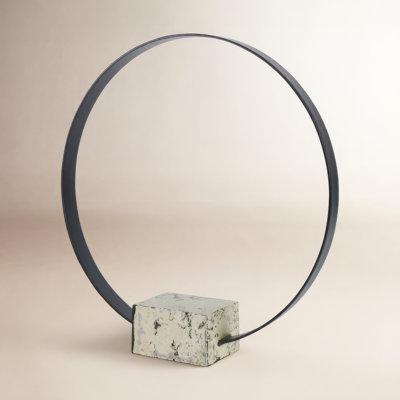
Product Details
About the Designer
Ron Arad Israel (1951 - )
Ron Arad was born in 1951 in Tel Aviv into an artistic family - his mother is a painter, his father a photographer. He attended the Academy of Art in Jerusalem until the early 1970s, when he decided to leave Israel and study architecture in the UK. Settling in London in 1974, he enrolled at the city's least conventional school, the Architectural Association, where he studied under Peter Cool and Bernard Tschumi with classmates like Nigel Coates, Peter Wilson and Zaka Hadid. He quickly developed artistic and cultural interests outside architecture, and his work became increasingly oriented towards design and non-rhetorical artistic uses of materials. In 1981, with Dennis Groves and Caroline Thorman, he set up One Off, the design agency that made its successful debut with a set of tubular steel furniture. Arad has made no secret of his predilection for technology and the modern aesthetic as ways of revisiting and revising typologies from the past. As a sculptor and craftsman who has taught himself to cut sheet steel, bend wooden legs and put bent plywood to new sculptural uses, he has produced furniture that is emotional and sensual as well as aggressively light and practical. A similar philosophy is evident in his designs for the futuristic foyer of the Opera House in Tel Aviv, the Belgo restaurant in London, the installations for "L'Esprit du Nomade", Fondation Cartier in Paris, the impressive project of Adidas Stadium in Paris, the Domus Totem for the Triennale in Milan, the exclusive Yohji Yamamoto's Store in Tokyo, the Design Museum in Holon, Israel.
Features:
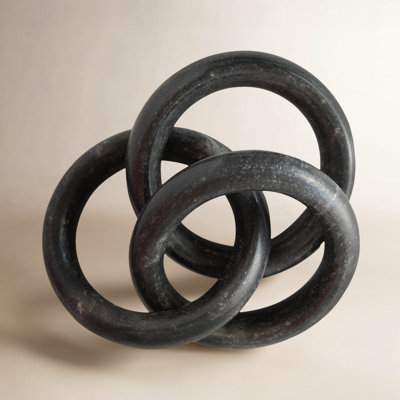
- Originally part of the "Spring" collection for Moroso
- Reduced to 1:6 scale
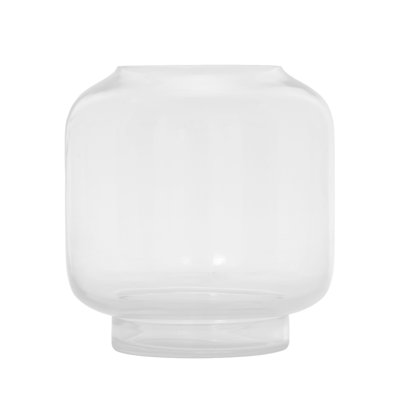
- Miniatures correspond in great detail to the originals
- Ideal illustrative material for instructors, designers, and architects
- Overall Dimensions: 6.75" H x 8.5" W x 5" D
Design:
- Design is the process by which almost all objects in Vitra's surroundings are instilled with a specific design and function - from cars to paper clips, from clothing to chairs. And design does not just mean giving things a shape. Design creates the basis which enables things to function in the desired manner. It is a process in which complementary but often mutually contradictory requirements have to be met (comfort, technology, ergonomics, ecology, economics, aesthetics). Design can be successful only when the balance of all these factors is attained.
Quality:
- Once in the factory, Vitra staff manufacture furniture to precise standards, individually ensuring the quality of each product.
- Vitra has been certified for DIN EN ISO 9001 : 2000.
- Vitra's focus on quality does not end at the factory door - they believe that providing clients with exceptional service is just as important as manufacturing furniture. In order to make certain Vitra clients enjoy consistently high quality in all Vitra products, they have set up their own test center which monitors products against criteria that are far more stringent than the statutory standards.
Ergonomics:
- Ergonomics is an applied science that studies the relationship between human beings and machines. Vitra produces furniture that responds to the ergonomic requirements of the body and as a consequence has a positive effect on health and well-being. All Vitra products (except for the experimental series Vitra Edition) have been tested by independent institutions. They comply with prescribed standards under the European Directive on VDU Work and are marked with the GS seal (= Geprüfte Sicherheit or Tested Safety, seal of the independent certification company LGA).
Ecology:
- Vitra's contribution to ecological conservation does not stop with a close examination of materials and processes. All aspects of the company's work involve ecological thinking.
- In 1991, Vitra set up an internal ecology committee to discuss environmental topics. This team identifies new tasks, and its project teams work together to find solutions.
- Vitra uses only non-CFC foams and adhesives free of toxic solvents; all possible materials are recycled. Wherever possible, Vitra uses recycled materials.
- Vitra's goal during production is to minimize noise and emission levels as well as to reduce waste. Packaging materials are kept to a minimum and re-used as often as possible.
See something odd? Report it here.
Thanks for helping us be 100% accurate.