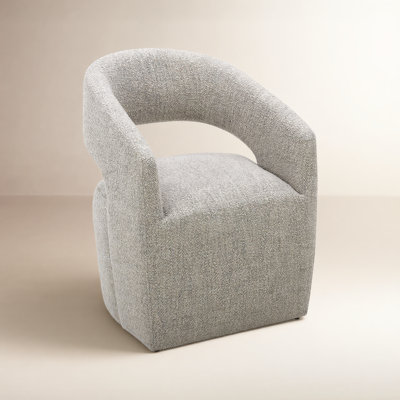
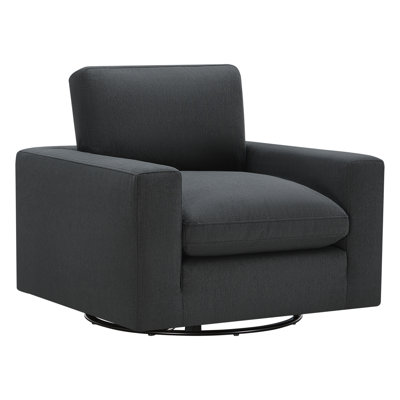
Product Details
About the Designer
Eero Saarinen Finland (1910 - 1961)
Eero Saarinen shared the same birthday as his father, Eliel Saarinen. They emigrated to the United States of America in 1923, when Eero was thirteen. He grew up in Bloomfield Hills, Michigan, where his father was a teacher at the Cranbrook Academy of Art and he took courses in sculpture and furniture design there. He had a close relationship with fellow students Charles and Ray Eames, and became good friends with Florence Knoll (née Schust).
Beginning in September 1929, he studied sculpture at the Académie de la Grande Chaumière in Paris, France. He then went on to study at the Yale School of Architecture, completing his studies in 1934. Subsequently, he toured Europe and North Africa for a year and returned for a year to his native Finland, after which he returned to Cranbrook to work for his father and teach at the academy. He became a naturalized citizen of the U.S. in 1940. Saarinen was recruited by Donal McLaughlin, an architectural school friend from his Yale days, to join the military service in the Office of Strategic Services (OSS). Saarinen was assigned to draw illustrations for bomb disassembly manuals and to provide designs for the Situation Room in the White House. Saarinen worked full time for the OSS until 1944. After his father's death in 1950, Saarinen founded his own architect's office, "Eero Saarinen and Associates". Eero Saarinen died of a brain tumor in 1961 at the age of 51
In any design problem, one should seek the solution in terms of the next largest thing, designer Eero Saarinen once said. "If the problem is a chair, then its solution must be found in the way it relates to the room...." One glance at the ultra-modern Tulip Chair and you'll instantly think of a place in your home for it. Whether you make put four of them around your kitchen table or in your home office--the Tulip Chair is truly one of a kind. Eero Saarinen might be considered by some to be a purist when it came to his approach towards architecture and interior design. He sought the essential idea and reduced it to the most effective structural solution within an overall unity of design. To that end, he designed the Tulip Chair in 1957 in terms of setting, rather than a particular shape. The Tulip is a single-legged chair made from fiberglass-reinforced resin. With Tulip, Saarinen realized his ideal form of unity: "Every significant piece of furniture from the past has a holistic structure." Saarinen's Tulip Chair won the prestigious Museum of Modern Art Award in 1969, the Federal Award for Industrial Design in 1969 as well as the Design Center Stuttgart Award in 1962. Each authentic Tulip Chair features the KnollStudio® logo and designer signature stamped into the base of the chair. Additionally, the Tulip Chair is GREENGUARD Indoor Air Quality Certified®.
Features - Tulip collection
- Design Year: 1957
- Base of chair made of cast aluminum in a rilsan coated finish
- Shell of chair made of molded fiberglass with a reinforced, plastic bonded finish
- Includes felt glides for hard floors
- Upholstered foam cushion is sold separately
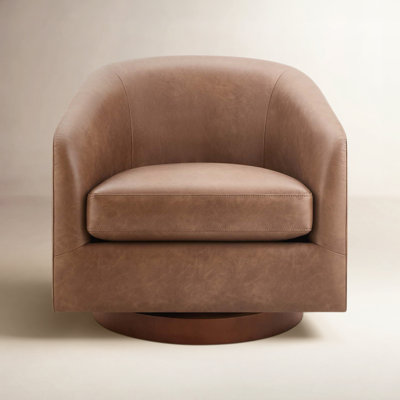
- Chair features swivel mechanism
Care & Maintenance - Knoll recommends cleaning with Windex, Fantastik, or other ordinary non-abrasive household soaps or detergents
- For ink stains on white surfaces, Knoll recommends using Soft Scrub
- For scratches and chips, Knoll recommends scrubbing with Comet, Ajax or other mild abrasives
- For deeper scratches, Knoll recommends a good grade automotive acrylic-lacquer touch up paint
- Shine with a high grade auto polish
- Never use harsh abrasives or steel wool
- To properly maintain swivel mechanism, Knoll recommends applying a paste-type grease once a year
*This product is made to order and thus customer orders cannot be canceled once the products go into production Dimensions: - Overall Dimensions: 32" H x 20" W x 21.25" D
- Seat Height: 18.5"
Order with Confidence:
- Sustainability Statement: Sustainable design is a key component of Knoll's environmental focus. Knoll's commitment to social responsibility and a healthy environment has prompted the company to further articulate its longstanding environmental programs and, with encouragement and support from colleagues in the industry, Knoll has re-energized its focus on such "green" initiatives as life cycle analysis and LEED® certification. Knoll is proud to have contributed to projects that have received LEED certification from the U.S. Green Building Council.
- Should you discover shortly after receiving your Tulip Chair that parts are either damaged or missing, please call us immediately, and we will be happy to send you replacement parts as soon as possible and at no additional cost.
- Each authentic Knoll product is stamped with the KnollStudio® and designer signature and includes a certificate of authenticity.
Note: This quality item is custom made for your order. Unfortunately, this means that orders cannot be cancelled or returned once placed, so please call our trained staff with any questions you may have prior to ordering - we will ensure that you get exactly what you need.
See something odd? Report it here.
Thanks for helping us be 100% accurate.