As an art student at Orange Coast College in the ‘90’s, Paul Frank used some spare orange vinyl to create a wallet. When friends expressed an interest, Frank began to sew guitar straps and backpacks. He eventually formed Paul Frank Industries in order to keep up with the demand for his products, and today, the company has stores in LA, San Francisco, NYC, Vegas, Chicago, London, Amsterdam, Berlin, and Bangkok.
Paul Frank’s influences range from The Who and The Rolling Stones to classic industrial design. His bold, graphic characters, such as Julian, are wildly popular, appearing on everything from teenage gear to Eric Pfeiffer’s pieces for 10 Grain. He has also collaborated with such bands as Bad Religion, Radiohead, The Vandals, Alkaline Trio, Atreyu, Tool, Gorilla Biscuits, The Aquabats, and Pretty Girls Make Graves, as well as the Coachella festival and Lollapalooza. He has also collaborated with Elvis Presley and Andy Warhol, and companies like Mattel, Oscar Mayer, John Deere, Hello Kitty, and Lego.
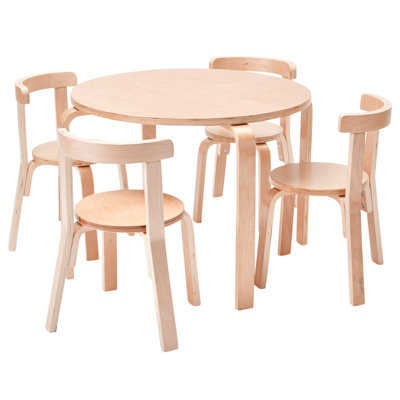
Smooth, contoured edges and a milk colored top make this table an inviting place to gather for a bite to eat, play a board game, construct a puzzle, or for your little protégé to hone their artistic talents. The sturdy molded ply legs provide for a solid foundation that insures this table will be around until your youngster leaves the nest. This simple yet elegant table was designed by Eric Pfeiffer, whose reductive designs are expressed in timeless forms that recognize a products usefulness and necessity while exhibiting the beauty and honesty of the material utilized. Eat, play, create.
Designed by: Eric Pfeiffer and Paul Frank
Features:
- Available in Julius Dot and Chili red printed surfaces
- Constructed of molded plywood with a birch veneer
- Smooth, contoured edges
- Meets ASTM safety standards
Go Green with Small Paul by 10 Grain:
10 Grain goes out of its way to insure that environmental concerns are addressed in the design and manufacturing of their products. Their Bent Ply products utilize much less raw materials compared to solid wood items (one tree to five trees on average!). The raw materials they use are cultivated from planned forests that are continually regenerated. Recycled cardboard boxes and inserts are used in their packaging.